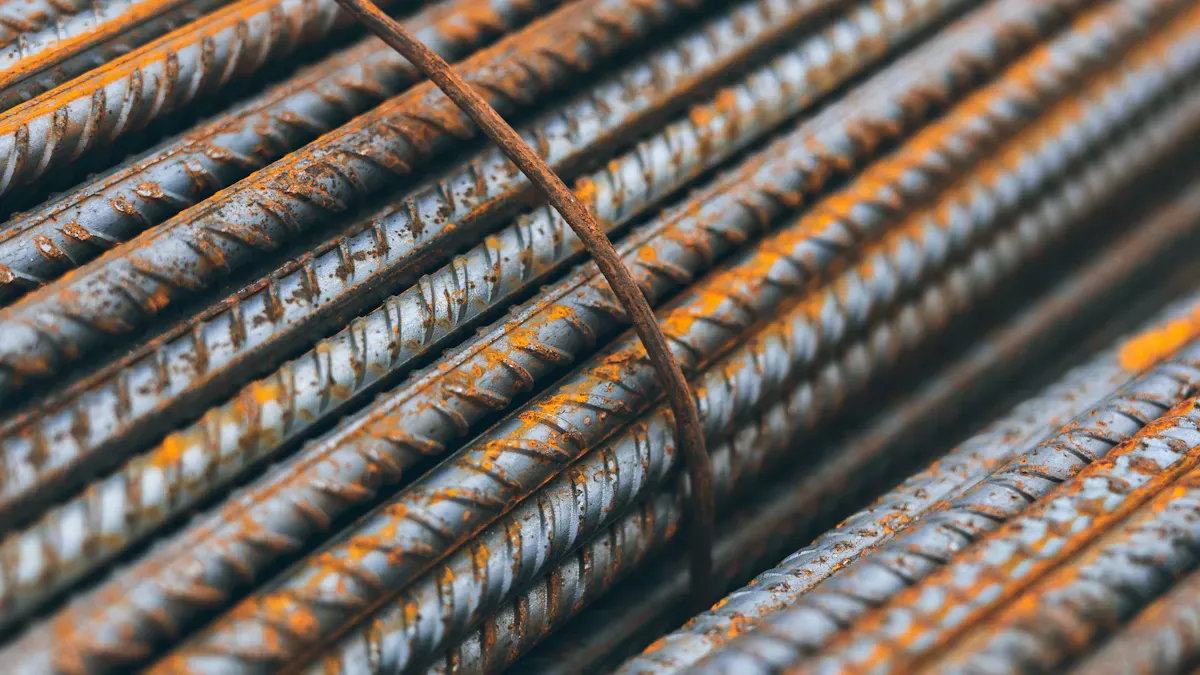
When you pick materials for building in 2026, ductile iron is the best choice. New numbers show that car and building companies use ductile iron a lot. They like it because it is strong and can be used in many ways. One reason why ductile iron is preferred over alternatives is that it is tough, lasts long, and does not cost too much. The material you pick helps keep your project safe and worth more. You should always think about how well it works and how much it costs to get the best outcome.
Key Takeaways
Ductile iron is strong and flexible. It does not cost a lot. This makes it great for many building uses in 2026.
Pick ductile iron for jobs that need to last long. It can handle stress better than cast iron. It is also easier to use than steel.
Ductile iron has special features. It has high yield strength and ductility. It can take hits better than cast iron. It keeps its shape when pressed.
Think about how ductile iron helps over time. It might cost more at first. But it needs fewer fixes and less care later.
Keep learning about market changes and new ways to make things. This helps you pick the best materials for your building work.
Material Basics
Ductile Iron Overview
Ductile iron is used in many new buildings. It is made from iron, carbon, and silicon. Engineers add magnesium to make it strong and bendable. Ductile iron castings do not crack or bend easily. You see ductile iron in bridges, pipes, and big machines. Ductile iron has high yield strength and stretches well. It can handle stress and lasts a long time. You use ductile cast iron for tough and strong parts.
Ductile iron castings make structures safer. You pick ductile iron for strength and flexibility.
Steel Overview
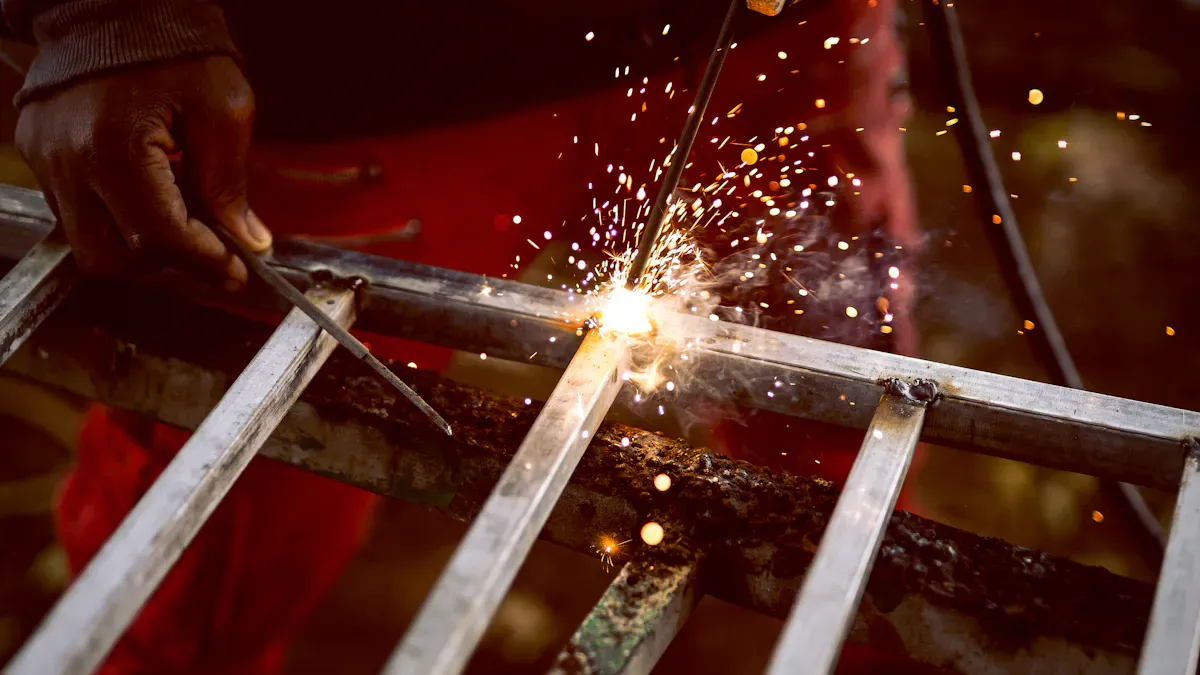
Steel is a good choice for many uses. It is made by mixing iron with carbon and other elements. You see steel in beams, columns, and frames. Steel bends but does not break and holds heavy loads. You can weld steel easily, and it fits many designs. Steel is used in tall buildings, bridges, and cars. Steel has high tensile strength and is easy to machine.
Cast Iron Overview
Cast iron comes in different types. Gray cast iron is used for engine blocks, pipes, and machine bases. Gray cast iron has graphite flakes, so it is brittle but easy to machine. White iron is used for parts that need to resist wear. White iron is hard but cracks fast. Malleable cast iron bends more than gray cast iron. You use malleable cast iron for brackets and small parts. Cast iron does not handle shock well, but it wears slowly.
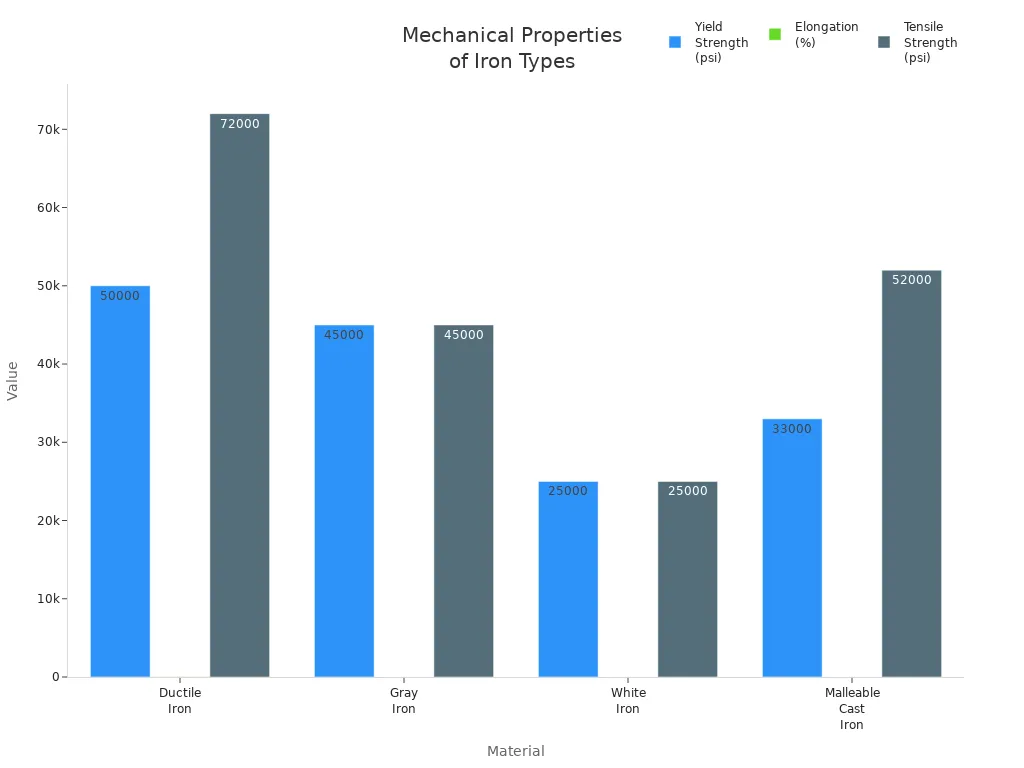
Material | Elongation (%) | Tensile Strength (psi) | Hardness (Brinell) | Corrosion Resistance | Thermal Expansion (20C) | Machinability | Weldability | |
|---|---|---|---|---|---|---|---|---|
Ductile Iron | 50,000 | 18 | 72,000 | 130-217 | Will rust, can develop a protective patina | 6.4610^-6 in/(in ºF) | Medium | Low-Medium |
Gray Iron | 40-50,000 | 0.5 | 40-50,000 | 260 | Will rust, can develop a protective patina | 6.4610^-6 in/(in ºF) | Good | Medium |
White Iron | 25,000 | 0 | 25,000 | 450 | Will rust, can develop a protective patina | 5.010^-6 in/(in ºF) | Good | Not weldable |
Malleable Cast Iron | 33,000 | 12 | 52,000 | 130 | Will rust, can develop a protective patina | 6.610^-6 in/(in ºF) | Medium | Possible |
Common Structural Uses
Ductile iron castings are used in water pipes, bridge supports, and gears. Ductile iron parts help build roads and tunnels. Steel is picked for frames, columns, and bars. Gray cast iron works best in machine bases and engine blocks. White iron is chosen for parts that need to resist wear. Malleable cast iron is used for brackets and small connectors. You pick materials based on what your project needs.
Tip: Match the material to the job. Ductile iron gives strength and flexibility. Steel holds heavy loads. Gray cast iron is easy to machine.
Mechanical Properties of Ductile Iron vs. Steel and Cast Iron
Strength and Yield Comparison
When you look at ductile iron, steel, and cast iron, you notice they are not the same in strength. Ductile iron has a yield strength of about 40 ksi. Steel has a yield strength of 36 ksi. Ductile iron bends less than steel. Both ductile iron and steel can handle pulling forces well. Cast iron has lower yield strength and cracks when stressed. Hardness matters too. Ductile iron is harder than steel, so it wears less. Cast iron is even harder, but it breaks easily. Ductile iron helps keep things quieter and safer by damping vibrations.
Ductile iron’s tensile strength is close to mild steel.
Ductile iron’s yield strength is better than mild steel.
Cast iron is very hard but has low yield strength.
Ductility and Toughness
You must check ductility and toughness for building jobs. Ductile iron stretches from 6% to 20% before it breaks. This makes ductile iron tougher than cast iron, which hardly stretches. Steel stretches well too, but ductile iron absorbs energy and resists impacts best. The table below shows how these properties compare:
Material | Ductility (Elongation) | Toughness (Impact) |
|---|---|---|
Ductile Iron | 6% – 20% | 30 J – 70 J |
Steel | Similar | Similar |
Cast Iron | Very low | Low |
Ductile iron gives you better toughness and ductility. Your structures can handle shocks and sudden loads.
Elasticity and Brittleness
Elasticity and brittleness help keep structures safe. Ductile iron is elastic and less brittle than cast iron. Graphite nodules in ductile iron let it bend and take stress. Cast iron is not elastic and breaks fast. Steel is somewhat elastic and tough, but it can fail in cold. Ductile iron resists breaking, even in cold weather. Ductile iron is also hard and resists abrasion, which helps in tough places.
Material | Elasticity | Brittleness | Key Features |
|---|---|---|---|
Ductile Iron | High | Less brittle | Spherical graphite nodules let ductile iron flex and absorb stress. |
Cast Iron | Low | More brittle | Flake graphite makes weak spots, so cracks spread easily. |
Steel | Moderate | Varies | Steel is strong but may not resist impacts well in cold. |
Tip: Pick ductile iron if you want strength, hardness, and flexibility. It works well in many building jobs.
Why Ductile Iron Is Preferred Over Alternatives
Performance in High-Stress Applications
You want buildings to stay strong when they hold heavy things. This is one big reason people pick ductile iron instead of other materials. Ductile iron is both strong and flexible. It does not break fast like cast iron. It bends but keeps its shape better than steel sometimes. You can find ductile iron in bridges, water pipes, and big machines. These jobs need materials that do not break when pushed hard.
Here is a table that shows how ductile iron works compared to steel and cast iron in tough jobs:
Property | Ductile Iron (SSF) | Steel | Cast Iron |
|---|---|---|---|
Strength | Intermediate | High | Moderate |
Ductility | High | Moderate-High | Low |
Machinability | Good | Excellent | Moderate |
Hardness | Uniform | Variable | Variable |
This table helps you see why ductile iron is picked over other choices. It works well in hard jobs. Ductile iron castings help make buildings safer and last longer. You can count on ductile iron for every project.
Flexibility and Impact Resistance
You need materials that can take hits and shocks. Ductile iron is special because it bends and does not break. This is another reason people pick ductile iron instead of other materials. The secret is the graphite nodules inside ductile iron. These nodules let it stretch up to 18% before it breaks. Cast iron has graphite flakes, so it breaks fast and stretches less than 1%. Steel can bend, but ductile iron takes in more energy.
Ductile iron can take 40,000 to 45,000 PSI before it bends.
Ductile iron can stop shaking 6.6 times better than SAE 1018 steel.
Ductile iron’s inside structure helps it take hits, especially in ferritic grades.
You see this in real life with bridge supports and pipes under the ground. These things get hit by cars or move with the earth. Ductile iron castings keep working even when hit or shaken. This is why ductile iron is picked over other materials for safety and strength.
Cost vs. Value
You want to get the most for your money. Ductile iron gives you good performance without costing too much. This is a big reason people pick ductile iron instead of other materials. You get strength and toughness for less money than steel. Cast iron might cost less, but it does not last as long or work as well. Ductile iron also saves money on repairs because it does not break or wear out fast.
You see the value in city water pipes, roads, and big machines. These jobs need materials that last and do not need lots of fixing. Ductile iron gives you the best mix of price and performance. You can trust it for new buildings and repairs.
Tip: When you pick materials, think about both the price and how well they work. Ductile iron gives you the best of both.
Now you know why ductile iron is picked over other materials. It gives you the right mix of strength, flexibility, and value. You can use it in many jobs and trust it for years.
Durability and Longevity
Corrosion Resistance
You want your buildings to last a long time. Materials must fight rust and decay. Corrosion resistance is very important for durability. Ductile iron works well when nickel and chromium are added. These elements help ductile iron stop rust, even in tough places. Chromium helps a lot, even if you use just a little. Cast iron can resist rust, but it is not as good as ductile iron with these elements. Steel needs coatings or treatments to keep rust away, especially in wet or salty areas.
Ductile Ni-resist cast iron resists corrosion very well.
Chromium helps stop rust, even in small amounts.
Steel needs regular protection to keep from rusting.
Tip: Pick materials that resist rust so you worry less about corrosion.
Maintenance Needs
You want to spend less time and money fixing things. Ductile iron makes repairs easier. Its design lets you check and fix parts quickly. Ductile iron castings need fewer repairs over time. Cast iron is hard to fix because it is stiff and cracks easily. Steel lasts long if you keep up with maintenance, but you must check it often for rust. Ductile iron saves you time and effort, especially in big projects.
Ductile iron is easy to fix and maintain.
Cast iron is hard to repair because it is rigid.
Steel needs regular checks and care to stop rust.
Harsh Environment Performance
You need materials that stay strong in tough places. Ductile iron castings work well in heat, cold, and under heavy loads. The graphite nodules inside ductile iron slow down cracks and help it last longer. Cast iron does not handle stress or temperature changes as well. Steel can work well, but only if you protect it from rust. Ductile iron is also recyclable, which helps the environment and saves resources.
Aspect | Description |
|---|---|
Performance Factors | Thermal conductivity, mechanical properties, and oxidation resistance help materials last in harsh places. |
Environmental Advantages | Ductile iron is very recyclable and helps save resources. |
Mechanical Load Effects | High heat and heavy loads cause stress, but ductile iron resists these changes better than cast iron. |
Note: Ductile iron lasts 2–3 times longer than gray iron under the same stress and temperature.
Versatility in Structural Design
Casting and Fabrication
You want materials that are easy to shape and strong. Making ductile iron uses special steps. First, iron and carbon are melted together. Next, magnesium or rare earth elements are added. This changes the graphite inside and makes it stronger. A special inoculant is added to control the grain structure. The molten iron is poured into molds and cooled. After cooling, impurities are removed and the quality is checked.
Step | Ductile Iron Process | Comparison to Steel and Cast Iron |
|---|---|---|
Melting the Iron | Melt iron and carbon together. | Similar initial step. |
Nodularization Treatment | Add magnesium or rare earth elements to change graphite shape. | Unique to ductile iron, adds complexity. |
Inoculation Treatment | Add ferrosilicon inoculant to control grain structure. | Similar to some steel processes but varies in specifics. |
Pouring and Cooling | Pour treated molten iron into molds to cool. | Common to all casting processes. |
Post-Treatment and Inspection | Remove impurities and check properties. | Additional step for quality assurance in ductile iron. |
Ductile iron needs more steps than cast iron. These steps make it stronger and more flexible. The process costs a bit more. You get a material that lasts longer and works better.
Adaptability to Complex Structures
You need materials that fit many shapes and tough jobs. Cast iron works for simple parts but breaks if designs are complex. Ductile iron bends without breaking. The round graphite nodules help spread out stress. This lets ductile iron handle changing forces and pressures.
Ductile iron fittings are used in water and sewage systems. These parts must handle movement and pressure changes. You can customize them for different designs. The material resists rust and lasts longer in harsh places.
Ductile iron fittings are strong and flexible.
They handle changing forces and pressures.
The material resists rust and lasts a long time.
You can customize the shape for many uses.
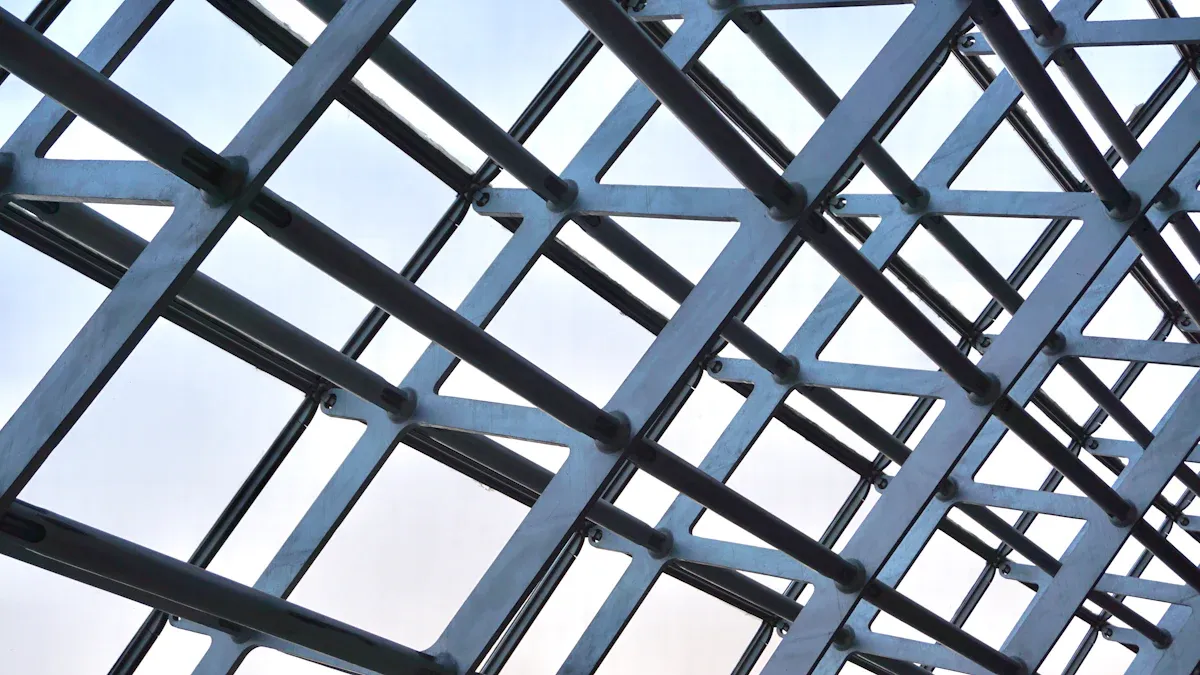
Ductile iron is used in bridges, pipelines, and machines. It adapts to complex shapes and keeps working under stress. This makes it a top choice for modern structural design.
Cost and Market Trends for 2026
Material and Production Costs
You want to know how much materials cost before you start a project. Ductile iron gives you a good balance between price and performance. You pay less at first compared to forged steel. Cast iron often costs even less, but it does not last as long. The process to make ductile iron is more advanced than cast iron, but you get better results. Steel prices are expected to drop by about 1.8% in 2026. This means you might see some savings if you choose steel. Still, many builders pick ductile iron for its strength and value.
Lifecycle and Maintenance Costs
You need to think about how much you will spend over time. Cast iron has a lower starting price, but it needs more repairs. It breaks easily and rusts faster. Ductile iron costs more at first, but you save money because it lasts longer and needs less fixing. Steel has a higher price, but you do not have to repair it as often. The table below shows how these materials compare:
Material | Initial Cost Advantage | Maintenance Intervals | Repair Complexity & Cost | Failure Risk & Unplanned Downtime |
|---|---|---|---|---|
Ductile Iron | Shorter intervals | Similar costs | Higher risk of sudden failure | |
Forged Steel | Higher initial cost | Extended by 30%-50% | Similar costs | Lower risk of unplanned downtime |
You see that cast iron valves are cheap at first, but you pay more later because they break and rust. Ductile iron valves cost more upfront, but you save money in the long run.
Supply and Demand Outlook
You want to know if you can get the materials you need. The market for ductile iron is growing because more people use it in cars and buildings. Builders like its strength and how long it lasts. Cast iron demand stays steady, but it does not grow much. Steel demand is slowing down, and prices may drop a little in 2026. Trade tensions and regional problems can make prices change fast. You should look for different suppliers to avoid problems. New technology helps make materials cheaper and better. Government projects, like new roads and water systems, also increase demand.
Note: You should watch for changes in trade rules and world events. These can affect how easy it is to get materials and how much you pay.
Recent Advances and Sustainability
New Processing Methods
Every year, new ways to make materials are found. These new methods help make parts stronger and safer. Engineers now use special heat treatment on ductile iron. They use two steps to make the inside structure better. This gives more ferrite and stable austenite. The parts can change and work well during use.
Heat treatment makes parts stronger and tougher.
New casting methods make graphite nodules even.
Changing the inside structure lets you pick what you need.
NIPPON STEEL CORP. uses careful heating and cooling for 4140 steel. This makes it stronger and more bendable.
More carbon can cause cracks, so engineers change the mix.
More silicon changes the inside in a good way.
These new ideas help your materials last longer and work better. You can use ductile iron in cars, bridges, and machines. It is strong, bendy, and fights wear and rust. That is why many people pick it.
Environmental Impact
You want to know how your choices affect the earth. How much energy is used, if it can be recycled, and if it fights rust are important. The table below shows how ductile cast iron and 4140 steel compare:
Material | Production Energy | Recyclability | Corrosion Resistance | Environmental Impact |
|---|---|---|---|---|
4140 Steel | High | High | Needs treatments | Higher initial impact |
Ductile Cast Iron | Moderate | Moderate | Naturally resistant | Lower production impact |
Ductile cast iron uses less energy and hurts the earth less. Steel uses more energy and needs special care to stop rust. Both can be recycled, but ductile cast iron is better for the planet.
Tip: Pick materials that help your project and the earth. Your choices matter and can help the world.
2026 Recommendations
Best Use Cases for Ductile Iron
You want to pick the right material for your job. Ductile iron is used in many building projects. It is strong, flexible, and lasts a long time. Here are some ways ductile iron is used in 2026:
Ductile iron piles hold up deep foundations in homes and offices.
You can use it in city areas with old debris and fill.
Underground fire mains use ductile iron because it handles heavy loads and fights rust.
Regular commercial buildings use it because it saves money in places without much rust.
Valve and hydrant assemblies use ductile iron for parts that get lots of stress.
It works well in soft soils and helps stop settling problems.
You can use it in rooms with low ceilings where it is hard to reach.
Tip: Pick ductile iron when you need strong support, especially in tough ground or places with lots of stress.
When to Choose Steel or Cast Iron
You need to know when steel or cast iron is better for your job. Each material has its own good points. Use this table to help you choose:
Criteria | Ductile Iron | Steel | Cast Iron |
|---|---|---|---|
Good fatigue resistance | High toughness | Brittle, cracks fast | |
Load Conditions | Stable loads | Unpredictable loads | Light, steady loads |
Manufacturing Stability | Consistent | Consistent | Varies by foundry |
Section Thickness | Thick sections | Thin or variable | Thick, simple shapes |
Pick steel if your project has loads that change or needs extra toughness. Choose cast iron for simple shapes that do not get much stress. Always check the foundry’s work and the shape of your parts before you decide.
Note: Think about how each material breaks and the kind of loads in your job. This helps you pick the safest and cheapest option.
You know that ductile iron is flexible and lasts a long time. New research says 4140 steel is stronger, but ductile iron bends more before it breaks. Cast iron is easy to shape, but it breaks faster. When you pick materials, think about these things:
How the material affects the earth and how long it lasts
How much it costs and how often you need to fix it
What the job needs and where you will use it
Keep learning about new ideas and changes in the market. If you stay updated, you can pick better materials for your projects.
FAQ
What makes ductile iron better than cast iron for buildings?
Ductile iron bends without breaking. Cast iron cracks under stress. You get more safety and longer life with ductile iron in your building projects.
Can you weld ductile iron like steel?
You can weld ductile iron, but it needs special care. Steel is easier to weld. Always check with your supplier before welding ductile iron parts.
Does ductile iron rust faster than steel?
Ductile iron can rust, but it forms a protective layer. Steel needs coatings to stop rust. You get good rust resistance with ductile iron, especially with added nickel or chromium.
Where should you use cast iron instead of ductile iron?
Use cast iron for machine bases or parts that do not face heavy loads. Cast iron works well when you need easy machining and do not need much flexibility.