To ensure corrosion resistant piping in chemical plants by 2026, you need the best materials to prevent corrosion. Currently, the leading options include:
Resistoflex lined pipe, which uses PTFE, PFA, or FEP, is ideal for handling aggressive chemicals.
Corrosion-resistant alloy pipe, such as stainless steel or Inconel, performs well in demanding plant environments.
Stainless steel pipes are reliable under high heat and pressure.
Plastic and composite pipes, including UPVC, CPVC, and PEX, offer cost-effective and flexible solutions.
Copper pipes are suitable for water but not for harsh chemicals.
Material Type | Market Share Percentage | Projected Trend |
|---|---|---|
Fusion Bonded Epoxy (FBE) | Most widely used due to its excellent corrosion resistance | |
Multi-layer coating technologies | N/A | Fastest growing segment, increasing over 20% annually |
It’s essential to match each material to the specific chemicals used in your plant. One-stop platforms like ruisong make it easy to find the right corrosion resistant piping for chemical plants in 2026. UPVC pipe stands out as a smart choice for corrosion resistant piping in chemical plants by 2026.
Key Takeaways
Pick the best piping material by checking if it works with the chemicals. This helps stop leaks and damage. – Think about using non-metallic pipes like UPVC and CPVC. These can save money and last a long time. – Check the temperature and pressure limits of the pipes. Make sure they fit what your plant needs. – Use websites like ruisong to look at different piping choices. You can also find good suppliers there. – Check how often pipes need fixing. Choose pipes that do not need repairs often. This saves time and money.
Top Corrosion Resistant Piping Chemical Plants 2026
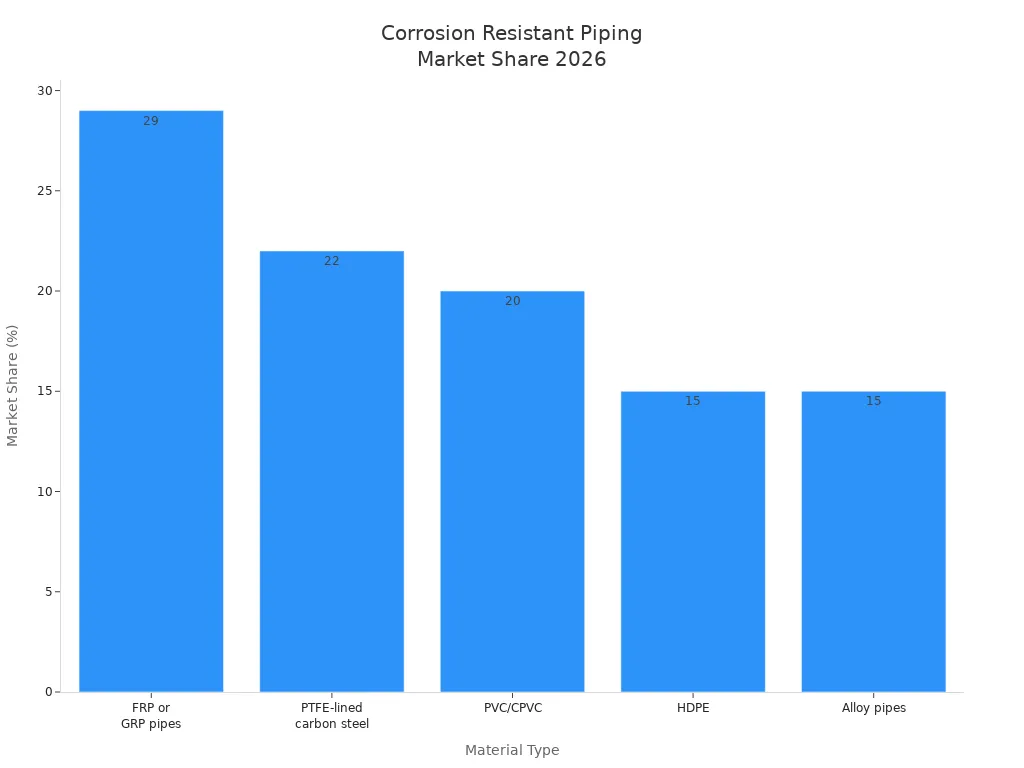
If you pick corrosion resistant piping for chemical plants in 2026, you have many good choices. Each material works best in different chemical settings. The table below shows which materials are most used:
Material Type | Market Share (%) |
|---|---|
FRP or GRP pipes | 29 |
PTFE-lined carbon steel | 22 |
PVC/CPVC | 20 |
HDPE | 15 |
Alloy pipes | 15 |
UPVC Pipe
UPVC pipe is a great choice for stopping corrosion and saving money. It works well in many chemical plants. UPVC can handle most acids and alkalis. You will find it simple to put in and take care of. But UPVC does not do as well with high pressure as some other pipes.
CPVC and Polypropylene
CPVC and polypropylene are being used more often now. CPVC is special because it stops corrosion inside and outside from many chemicals. CPVC also costs less over time and needs less fixing than metals or other plastics. Polypropylene is good at resisting chemicals and works well at medium temperatures.
New technology has made non-metallic materials like CPVC better at stopping corrosion than old metal pipes.
HDPE and GRE
HDPE is strong and resists chemicals well. It is a good pick for many plant jobs, but it does not work well when it gets very hot. GRE and GRP pipes are also great at stopping corrosion. The resin in GRE or GRP changes how well the pipe works, so you need to pick the right one for your plant’s chemicals.
Stainless Steel Grades (304, 316)
Stainless steel 304 and 316 are still trusted for many chemical plant jobs. You can use these grades for systems with high pressure and heat. They resist corrosion from lots of chemicals, but some acids and chlorides can still cause trouble.
High-Performance Alloys
You might need high-performance alloys like Inconel or Hastelloy for the toughest chemicals. These alloys can handle harsh places and last a long time. They cost more, but they keep your system safe from bad corrosion.
Lined and Coated Pipes
Lined and coated pipes mix steel strength with special linings that resist chemicals. PTFE-lined carbon steel pipes, for example, protect against strong chemicals and help pipes last longer. You can use these pipes when you need both strength and top corrosion resistance.
Non-metallic pipes like UPVC, CPVC, HDPE, and GRE are being used more for corrosion resistant piping in chemical plants in 2026. These materials work well and help you spend less on fixing pipes.
What Makes a Material Corrosion Resistant
Chemical Compatibility
You must check if the pipe can handle your plant’s chemicals. Some pipes resist acids, bases, and solvents better than others. CPVC works well with strong acids and alkalis. Polypropylene can handle weak acids and bases but not strong oxidizers. Polyvinylidene fluoride resists strong acids and many solvents, but not concentrated alkalis. The table below shows how each material reacts to chemicals:
Material | Chemical Resistance Characteristics |
|---|---|
CPVC | Handles strong acids and alkalis, works with oxidizers and sodium hypochlorite solutions. |
Polypropylene | Works with weak to moderately strong acids, bases, and water-soluble solvents; breaks down with long-term oxidizer use. |
Polyvinylidene fluoride | Handles strong acids, weaker bases, solvents, and oxidizers; not good with concentrated alkalis. |
Tip: Always pick pipe material that matches your chemicals. This helps you stop leaks and damage.
Physical Properties
You should check how strong and flexible each pipe is. Strong pipes do not crack or break easily. Flexible pipes bend without snapping. These features help your system last longer and handle stress. UPVC and HDPE are strong and flexible for many plant jobs.
Temperature and Pressure Resistance
You need to know how much heat and pressure your pipes can take. Some pipes work well in high temperatures, but others do not. The table below shows the limits for common piping materials:
Piping Material | Temperature Limit | Application Area |
|---|---|---|
Carbon Steel | Steam and high-pressure piping systems | |
Stainless Steel | Up to 1,650°F (900°C) | Chemical processing and refineries |
Alloy Steel | Over 1,100°F (593°C) | Power generation |
Nickel Alloys | Up to 2,000°F (1,093°C) | Heat exchangers and nuclear applications |
You should pick a pipe that fits your plant’s heat and pressure needs. This keeps your system safe and reliable.
Maintenance and Longevity
You want pipes that last a long time and do not need much fixing. Metallic pipes usually last about four years before you need to replace them. Corzan® CPVC pipes can last over twelve years. Many non-metallic pipes can last up to fifty years, but most plants expect them to work for twenty to thirty years. If you pick corrosion resistant piping chemical plants 2026, you can spend less on fixing pipes and keep your plant running smoothly.
Comparing Corrosion Resistant Piping Chemical Plants 2026
Performance in Chemical Environments
You need to know how each pipe handles your plant’s chemicals. Some pipes are better with acids, bases, or solvents. The table below shows how common pipes work with different chemicals:
Material | Applications | |
|---|---|---|
CPVC | Resists strong acids, alkalis, oxidizers, and sodium hypochlorite; limited with some strong solvents. | Industrial pressure and chemical processes |
Polypropylene | Good with weak to moderately strong acids, bases, and water-soluble solvents; breaks down with long-term oxidizer use. | Chemical waste and domestic water |
PVDF | Handles strong acids, weaker bases, solvents, and oxidizers; not good with concentrated alkalis. | Various chemical environments |
You should pick a pipe that matches your chemicals. For example, CPVC is good for strong acids and alkalis. You can use it for many plant jobs. Polypropylene works well for waste lines or water systems. PVDF is best for strong acids and solvents.
Note: Using the wrong pipe can cause leaks and damage. This can hurt your plant and the environment.
Cost and Lifecycle
When you think about cost, look at more than just the pipe price. You also pay for workers and putting the pipes in. These costs can be more than half of what you spend. Non-metallic pipes like CPVC are lighter than metal pipes. This makes them easier and cheaper to put in. You also save money because these pipes last longer and need less fixing.
Metal pipes often need to be replaced after about four years. Non-metallic pipes, like Corzan CPVC, can last over twelve years. Some systems last up to fifty years if you take care of them. Long-lasting pipes mean you spend less money over time. You also help the environment because you throw away fewer old pipes.
If you want to save money and stop downtime, non-metallic pipes are a smart choice for corrosion resistant piping chemical plants 2026.
Installation and Maintenance
You want pipes that are easy to put in and fix. Light pipes, like Durastatic polyurethane and CPVC, make work simple. You can move and fit them without big machines. These pipes also connect well with normal systems, so you do not need special tools.
Light pipes lower worker costs.
Flexible pipes fit in small spaces.
You can use tools like vibration checks and heat cameras to find problems early.
Finding problems early lets you plan repairs when things are slow, so you do not have to stop your plant.
You should also design your system with the right suction and discharge pipes. This helps stop damage and keeps your plant working well. Support structures keep pipes from hurting pumps and other equipment.
Tip: Pick pipes that need less fixing. This keeps your plant safe and saves money.
Application Suitability
You must pick the right pipe for your plant’s needs. Some pipes work better for certain jobs. The table below shows which pipes fit different uses:
Material Type | Applications | |
|---|---|---|
Resistoflex-lined pipes | Acid handling, solvent transport | Outstanding resistance to almost all chemicals, high temperatures and pressures |
Corrosion-Resistant Alloy | Tough industrial applications | Excellent resistance to corrosive environments, high temperatures |
Stainless Steel Pipes | Water treatment, food and beverage | Excellent corrosion resistance, withstands high temperatures and pressures |
Plastic and Composite Pipes | Low-pressure fluid systems | Cost-effective, lightweight, resistant to acids and alkalis |
For acids or solvents, use Resistoflex-lined pipes. If you need to handle high heat or tough chemicals, use corrosion-resistant alloys or stainless steel. For low-pressure jobs, plastic and composite pipes save money and resist many chemicals.
When you plan for corrosion resistant piping chemical plants 2026, always think about the chemicals, pressure, and heat in your plant. This helps you choose the best pipe for each job.
Pros and Cons of Each Material
UPVC Pipe
UPVC pipes are very good at stopping corrosion. They are great for moving dangerous liquids. These pipes do not rust, so your chemicals stay clean. Your system stays safe too. UPVC pipes last a long time and do not need much fixing. This helps you save money over time. You can use UPVC in wet or salty places. The pipe parts do not get rusty. UPVC can handle many chemicals like acids, alkalis, and some solvents. But UPVC is not the best for jobs with high pressure or heat.
Tip: Pick UPVC if you want a strong, easy-care pipe for most chemical plant jobs.
CPVC and Polypropylene
CPVC can stop strong acids, alkalis, and many oxidizers. You can use it for hard chemical work. Polypropylene works with weak and medium acids and bases. It is good for waste pipes and water lines. Both pipes cost less than metal ones. You do not spend much on repairs. These pipes are light, so they are easy to put in. CPVC and polypropylene do not work well with very high heat or strong oxidizers.
HDPE and GRE
Material | Strengths | Weaknesses |
|---|---|---|
HDPE | Does not rust or get holes from other metals or germs. | Gets weaker in sunlight; cannot take much heat or pressure. |
GRE | Stops corrosion well and handles strong chemicals. | Breaks easier than metal; can crack if hit. |
You can use HDPE and GRE with many chemicals. GRE is good for brine and caustic soda. GRE can take more pressure in small pipes but needs careful handling.
Stainless Steel and Alloys
Stainless steel stops some to a lot of corrosion. Alloys like Hastelloy can stop even the worst chemicals. These pipes keep your plant and workers safe. You may pay more for alloys with lots of nickel. Sometimes it is hard to get these pipes fast. Stainless steel is good for hot and high-pressure jobs.
Lined and Coated Pipes
Advantage | Description |
|---|---|
Barrier Protection | These pipes have a strong layer that blocks water, air, and chemicals. |
Chemical Resistance | They can stop damage from strong chemicals like sulfuric acid and sodium hydroxide. |
Thermal Resistance | The lining stays bendy and does not break in high heat. |
Contamination Prevention | The inside is smooth and easy to clean, so germs and dirt do not build up. |
Note: Lined and coated pipes mix steel strength with special linings that stop chemicals. You can use them for the hardest jobs in your plant.
Materials to Avoid
Picking the right pipe keeps your plant safe and working well. Some materials can cause big problems. You should not use them in chemical plants.
Rust-Prone Metals
Rust-prone metals do not last long with chemicals. They can leak, break, and cost a lot to fix. It is best not to use them in most chemical plants. The table below lists metals that rust fast and the problems they cause:
Metal | Prone to Corrosion | Associated Risks |
|---|---|---|
Galvanized Pipe | Yes | Big money loss and plant shutdowns |
Copper | Yes | Rusts fast in tough chemical settings |
Brass | Yes | Gets tiny holes with some water types |
Carbon Steel | Yes | Keeps rusting and can break the system |
Galvanized pipes rust quickly when near chemicals. This can make you stop work and pay for repairs. Copper and brass also rust in harsh places. Brass can get small holes that leak. Carbon steel rusts all the time and can break your system. You should use metals or plastics that resist rust instead.
⚠️ Do not use these metals for pipes in chemical plants. They make your plant less safe and cost more to fix.
Inadequate Plastics
Some plastics cannot handle chemicals or heat. These plastics can crack, melt, or fall apart. You should not use them for pipes in chemical plants. Low-quality PVC, ABS, or polyethylenes do not work with strong acids, alkalis, or high heat.
Cheap PVC pipes bend and leak.
ABS pipes break in sunlight and with chemicals.
Weak polyethylenes melt or crack under pressure.
You need plastics made for chemicals and high heat. Always check what the maker says about the plastic. Using the wrong plastic can cause spills and make your plant unsafe.
Tip: Only use plastics tested for chemical plants. This keeps your pipes safe and working well.
Selection Factors for Chemical Plant Piping
Chemical and Process Requirements
You need to pick pipes that work with your plant’s chemicals. Each chemical can act differently with pipe materials. Some pipes are good with acids, but others are better with bases or solvents. You should always look at a compatibility chart before choosing. Hotter temperatures can make corrosion happen faster. You must know how hot your process gets. Pressure and stress on the pipes also matter. Some plastics need extra help if you use them with high pressure. How you put in the pipe—if it touches chemicals or not—can change how long it lasts. You want pipes that do not need much fixing and last for years.
Description | |
|---|---|
Chemical Compatibility | Check a chart to make sure the pipe can handle your chemicals. |
Temperature | Hotter temperatures can make pipes corrode faster. |
Pressure and Mechanical Stress | Some pipes, like plastics, may need extra support if under a lot of pressure. |
Installation Type | How you install the pipe changes how well it works with chemicals. |
Maintenance Requirements | Pick pipes that last a long time and do not break often. |
Tip: Always check your chemicals, temperature, and pressure before you pick a pipe.
Budget and Total Cost
You should think about more than just what the pipe costs. Look at how much you will spend over time. This means the price for pipes, valves, and fittings at the start. Some pipes cost more to ship or bring from other places. You will also pay for fixing pipes and emergency repairs. If you need special linings, add that to your budget too. Think about how long the pipes will last and how much you save by stopping leaks or shutdowns.
How easy it is to get the pipes and if you need to import them
Money for fixing pipes and emergency repairs
Cost for special linings if you need them
How much you save by picking pipes that last longer
Compliance and Safety
You must follow safety rules when you pick pipes. These rules keep workers safe and help your plant run well. For example, B31.3 standards tell you how to design and build pipes. OSHA uses these rules to make sure your plant is safe. You should pick pipes that can handle strong chemicals like sulfuric acid, hydrochloric acid, caustic soda, and chlorine gas. Stainless steel, Hastelloy, and Inconel are good choices for tough jobs.
Standard/Regulation | Description |
|---|---|
B31.3 Standards | Tells you how to design and build safe pipes for your plant. |
OSHA | Uses B31.3 to make sure workers and plants are safe. |
Note: Always check local and world rules before you buy or put in pipes.
Procurement Platforms (ruisong)
You can make your job easier by using a platform like ruisong. Ruisong helps you find the right pipes for your plant. You can compare pipes, check prices, and see which ones fit your needs. This saves you time and helps you avoid mistakes. Ruisong also lets you find trusted sellers and see the newest product details.
Using ruisong helps you get safe, reliable, and affordable pipes for your chemical plant.
When you pick corrosion resistant piping, think about what chemicals are in your plant. You also need to look at how much the pipes cost and how long they will last. The table below can help you choose:
Why It Matters | |
|---|---|
Chemical Compatibility | Stops leaks and keeps pipes from breaking |
Cost vs. Lifecycle | Helps you save money as time goes on |
Mechanical Strength | Makes sure your system stays safe |
UPVC pipes can handle lots of acids, alkalis, and solvents. They stay strong even when things get tough.
You should use sites like ruisong to look at different pipe choices. Always ask suppliers about your chemicals, heat, and how much you want to spend to get the best pipes.
FAQ
What is the most corrosion resistant piping material for chemical plants?
You can pick UPVC, CPVC, PTFE-lined pipes, or high-performance alloys. These materials stand up to many chemicals. They last longer in harsh places.
How do you select the right pipe for your chemical plant?
Look at a chemical compatibility chart. Match the pipe to your plant’s chemicals, heat, and pressure. If you are not sure, ask suppliers for help.
Can you use plastic pipes for high-temperature applications?
Plastic pipes like UPVC and HDPE do not work well with high heat. For hot systems, use stainless steel or special alloys instead.
Why should you avoid galvanized pipes in chemical plants?
Galvanized pipes rust fast when used with strong chemicals. This can cause leaks, plant stops, and costly repairs.
How does ruisong help with pipe selection?
Benefit | Description |
|---|---|
Easy Comparison | You can compare materials and prices. |
Trusted Sellers | You find good suppliers quickly. |
Latest Products | You see new pipe choices easily. |