The main difference in the gate vs ball valve debate comes down to how each valve controls water or gas flow. You get a quick shut off and a tight seal with a ball valve, making it great for frequent use. Choosing the right valve matters because:
The type you pick affects system pressure and efficiency.
The best match reduces leaks and corrosion.
Ball valves need less maintenance and last longer.
Key Takeaways
Pick ball valves if you need to turn water off fast and often. They close tightly and are simple to use.
Use gate valves for strong water flow and big pipes. They work best when all the way open or closed.
Think about costs over time. Ball valves might cost more at first but need less fixing and last longer.
Gate vs Ball Valve Key Differences
To help you compare gate and ball valves, here is a simple table that shows their main features:
Feature | Gate Valve | Ball Valve |
|---|---|---|
Mechanism | Flat or wedge-shaped gate moves up or down | Spherical disc with a hole rotates 90 degrees |
Operation | Multi-turn (360+ degrees) | Quarter-turn (90 degrees) |
Shutoff Speed | Slow | Quick |
Flow Control | Best for full open or closed, not for throttling | Good on/off, some can throttle |
Initial Cost | Lower | Higher |
Long-term Cost | Less favorable | Favorable |
Maintenance Needs | Higher | Lower |
Installation Space | Needs more vertical space | Compact, fits tight spaces |
Operation and Mechanism
The biggest difference between gate and ball valves is how they work. A gate valve has a flat or wedge-shaped gate. The gate moves up or down to open or close the valve. When the valve is open, water or gas flows straight through. This means there is little pressure loss. But you have to turn the handle many times to open or close it.
A ball valve has a round ball with a hole in the middle. You only need to turn the handle a quarter turn. When you do, the hole lines up with the pipe and lets water or gas flow. This makes ball valves easy to use. You get a tight shut off with less effort. You can also see if the valve is open or closed right away.
Tip: If you want a valve that is simple to use and shows if it is open or closed, a ball valve is a good choice.
Shutoff Speed and Flow Control
Ball valves close very fast. You can stop the flow almost right away with a quick turn. This is good for emergencies or when you need to stop water or gas quickly. Gate valves take longer to close because you must turn the handle many times. This slow closing helps stop water hammer. Water hammer is a sudden pressure surge that can hurt pipes.
Gate valves are best when you want the valve all the way open or closed. If you try to adjust the flow with a gate valve, the gate can wear out and leak. Ball valves are good for turning flow on or off. Some ball valves let you adjust the flow a little, but they are not as exact as special valves made for that.
Ball valves are best for quick shut off and when you use them a lot.
Gate valves are better for big pipes and high pressure when you do not open and close the valve often.
Cost and Installation Space
Gate valves usually cost less at first. But they may need more repairs later. Ball valves cost more at the start, but they last longer and need less fixing. This saves money over time. If you want something that lasts, ball valves are a smart choice.
Gate valves need more space up and down because the gate moves inside the valve. This makes them bigger, especially in large sizes. Ball valves are small and fit in tight spots. This is helpful in new buildings and machines.
Note: If you do not have much space or want a valve that is easy to put in, pick a ball valve.
You will see both types of valves in many places. Ball valves are used in oil and gas, food factories, chemical plants, heating and cooling, and plumbing. They are also good for machines that need to shut off often. Gate valves are common in big water pipes, power plants, mining, and wastewater plants. They work well with high pressure and dirty water, but you should use them where you do not need to open and close them a lot.
New ball valves use better materials that do not rust and save energy. This is good for the environment and helps cut down on waste. Both types of valves now have smart features, like remote control and monitoring. These can help you find problems before leaks or failures happen.
Durability, Maintenance, and Applications
Gate Valve Reliability and Corrosion
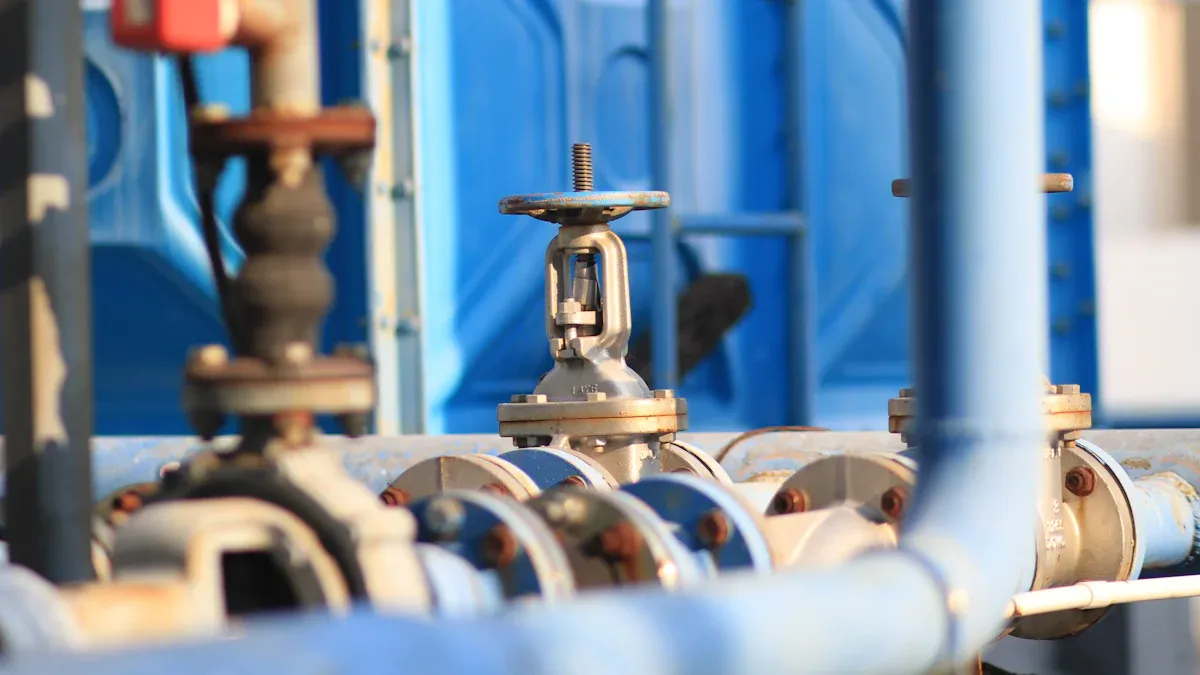
Gate valves are strong and work well with high pressure or heat. Many are made from ductile iron, which makes them tough. They can handle up to 640 psi and 730 °C. Their bodies and bonnets are built to stop leaks. This makes them good for blocking flow. But gate valves can rust or wear out. This happens more with dirty water or fluids with solids. They are best for clean liquids and gases.
Valve Type | Corrosion Resistance | Additional Notes |
|---|---|---|
Gate Valve | Can get worn down, especially with solids | Best for clean liquids and gases, but sealing parts can wear out if the fluid is dirty. |
Ball Valve Maintenance and Lifespan
Ball valves are simple and last a long time. They do not need much fixing because they have few moving parts. Checks are mostly for the seals and the ball. Small problems can be fixed by smoothing the parts. Ball valves do not rust as much as gate valves. Their sealed chamber keeps fluids away from inside parts. This helps stop leaks and makes them last longer. Ball valves often outlast gate valves, especially if you open and close them a lot.
Typical Uses for Gate Valves and Ball Valves
Gate valves are used in oil, gas, water, and power plants. They are good for big pipes and high pressure. Ball valves are found in chemical plants, HVAC, and plumbing. They are easy to use and control flow well. Ball valves work in tough places where you need good seals and little fixing.
Pros and Cons Overview
Valve Type | Advantages | Disadvantages |
|---|---|---|
Ball Valve | Quick and easy to use, seals well, small, strong, cheap to fix | Not great for long flow control, seals can get old in high heat |
Gate Valve | Little pressure loss when open, strong flow, good for big pipes | Slow to open or close, not for lots of use, needs more space, can wear out with dirty fluids |
Choosing the Right Valve
Think about how often you will use the valve, the pressure, and how much fixing it needs. Ball valves are best if you open and close them a lot. Gate valves are better for big pipes and high pressure. At Ruisong Build, we see ball valves last long and work well for most uses. Gate valves are still best for blocking flow in big, high-pressure systems.
You can see the main differences in this table:
Feature | Gate Valve | Ball Valve |
|---|---|---|
Operation | Best for rare use, high sealing | Great for frequent, quick shut off |
Maintenance | More complex, needs more care | Simple, easy to maintain |
Ball valves work well when you need to shut off flow fast. Gate valves fit big pipes and high flow. At Ruisong Build, we have found that ball valves suit most modern systems.
Ruisongbuild specializes in one-stop building material procurement. For our product catalog or a free quote, please contact me.
FAQ
What is the main reason to choose ball valves over gate valves?
You should pick ball valves if you want fast shutoff and easy use. Ball valves work well in places where you open and close valves often.
Can you use a gate valve for flow control?
You should not use a gate valve for flow control. Gate valves work best when fully open or closed. Using them to adjust flow can damage the valves.
How do you know which valves last longer?
Ball valves usually last longer than gate valves. Ball valves have fewer moving parts. You will spend less time fixing these valves in most systems.