You often find schedule 40 pvc pipe is the best option for home plumbing, irrigation, and underground drainage. You benefit from its affordability and easy availability for budget-conscious projects. Consider the following scenarios where schedule 40 works well:
Home plumbing and drainage systems with low pressure
Sprinkler and landscaping setups
Underground drainage that faces soil pressure
If you need pvc pipe for high-pressure or industrial applications, schedule 80 offers greater strength. Evaluate your project’s pressure, environment, and budget before making a Purchase Inquiry.
Key Takeaways
Choose Schedule 40 PVC pipe for low to moderate pressure projects like home plumbing and irrigation. It is cost-effective and easy to install.
Select Schedule 80 PVC pipe for high-pressure or industrial applications. Its thicker walls provide greater strength and durability.
Always check the wall thickness and pressure ratings before selecting a pipe. This ensures safety and reliability in your plumbing system.
Avoid mixing Schedule 40 and Schedule 80 pipes in the same system. This can lead to leaks and performance issues.
Consider environmental factors like UV exposure and chemical resistance when choosing your PVC pipe. This helps maintain long-term performance.
What Is Schedule 40 PVC Pipe

Features and Pressure Rating
You often choose schedule 40 for its versatility and reliability in many piping projects. This type of pvc stands out because it offers a balance between durability and cost. You benefit from its lightweight design, which makes installation straightforward. Schedule 40 pvc pipe resists corrosion and chemical damage, so you can use it in environments where metal pipes might fail. You should know that schedule 40 is mainly intended for cold water systems, but it can handle temperatures up to 140°F.
💡 Tip: Schedule 40 is not suitable for high heat or high-pressure conditions. If your project requires higher strength, consider schedule 80 instead.
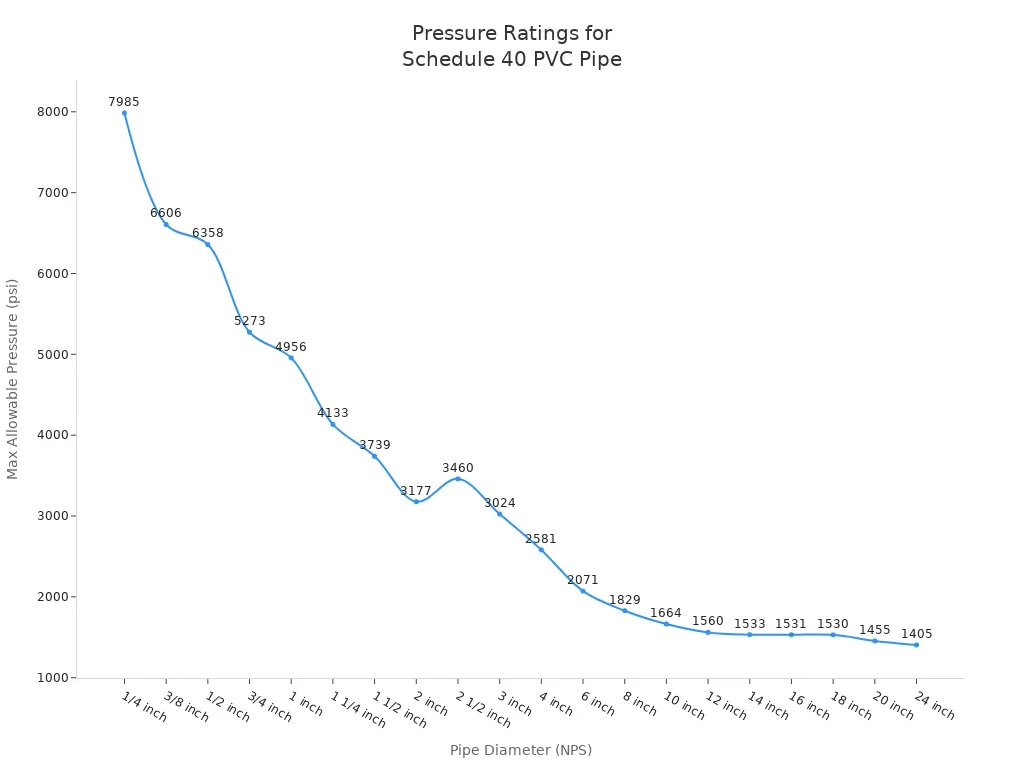
The wall thickness of schedule 40 is less than that of schedule 80, which means it has a lower pressure rating. However, it still provides enough strength for most residential and light commercial uses. The pressure rating depends on the pipe diameter. You can refer to the table below for typical maximum allowable pressures:
Diameter (NPS) | |
|---|---|
1/4 inch | 7985 |
1/2 inch | 6358 |
1 inch | 4956 |
2 inch | 3177 |
4 inch | 2581 |
8 inch | 1829 |
12 inch | 1560 |
24 inch | 1405 |
Common Applications
You find schedule 40 in a wide range of applications because of its dependable performance. In residential settings, you often use it for potable water distribution, drain, waste, and vent (DWV) systems. It also works well in swimming pool plumbing, where it circulates water between filters and pumps. For landscaping, schedule 40 supports irrigation systems that keep gardens and lawns healthy. In commercial environments, you rely on schedule 40 for similar applications, especially where moderate pressure and chemical resistance are important.
Application Type | Description |
|---|---|
Potable Water Distribution | Used for efficient water flow in cold water supply lines, ensuring longevity and minimal buildup. |
Drain, Waste, and Vent (DWV) | Essential for managing wastewater and venting sewer gases in both residential and commercial settings. |
Swimming Pool Plumbing | Circulates water between filters, pumps, and returns, resistant to UV and moisture. |
Landscape Irrigation Systems | Supports efficient water distribution for gardens and lawns, suitable for outdoor conditions. |
You should select schedule 40 when your project involves low to moderate pressure and you want a cost-effective, easy-to-install solution. If you expect higher pressure or more demanding conditions, schedule 80 may be a better fit.
What Is Schedule 80 PVC Pipe
Features and Pressure Rating
You select schedule 80 pvc pipe when your project demands higher strength and durability. This pipe features thicker walls compared to schedule 40, which allows it to withstand greater internal pressure. You notice that schedule 80 pvc pipe maintains the same outside diameter as schedule 40, so fittings remain compatible. The thicker wall increases the weight, but you gain improved resistance to impact and abrasion. You often use schedule 80 pvc pipe in environments where chemical exposure or mechanical stress is common.
Schedule 80 pvc pipe offers a higher pressure rating. For example, a 1-inch schedule 80 pvc pipe can handle up to 6300 psi, while larger diameters still maintain impressive strength. You rely on this pipe for both cold and hot water systems, as it tolerates temperatures up to 140°F. The gray color of schedule 80 pvc pipe helps you distinguish it from schedule 40, which is usually white.
🛡️ Note: You should choose schedule 80 pvc pipe for applications where safety and reliability are critical. The thicker wall provides extra protection against leaks and bursts.
Diameter (NPS) | Maximum Allowable Pressure (psi) |
|---|---|
1/4 inch | 11372 |
1/2 inch | 9200 |
1 inch | 6300 |
2 inch | 4700 |
4 inch | 3200 |
8 inch | 2200 |
12 inch | 1800 |
24 inch | 1500 |
Common Applications
You find schedule 80 pvc pipe in many demanding environments. Its strength and chemical resistance make it ideal for industrial and high-pressure systems. You often use schedule 80 pvc pipe in the following situations:
Chemical processing plants, where you transport acids, bases, and other harsh chemicals.
Water treatment facilities, which require high-pressure water distribution for efficient operation.
HVAC systems, where you install drain lines and other high-pressure components to maintain system performance.
You also see schedule 80 pvc pipe in manufacturing, laboratory settings, and commercial plumbing. You choose this pipe when you need reliable performance under stress, exposure to chemicals, or frequent temperature changes. Schedule 80 pvc pipe ensures your system operates safely and efficiently, even in the most challenging conditions.
Schedule 40 vs Schedule 80: Key Differences
Wall Thickness and Strength
You notice the most obvious difference between schedule 40 and schedule 80 pvc pipes when you examine their wall thickness. Both pipes have the same outside diameter, so you can use the same fittings for either type. However, schedule 80 features a much thicker wall compared to schedule 40. This thicker wall gives schedule 80 greater strength and makes it more suitable for demanding applications. You can easily identify the difference by looking at the pipe’s cross-section or checking the printed specifications.
Nominal Pipe Size | Schedule 40 Wall Thickness (in) | Schedule 80 Wall Thickness (in) |
|---|---|---|
½” | 0.109 | 0.147 |
1” | 0.133 | 0.179 |
2” | 0.154 | 0.218 |
4” | 0.237 | 0.337 |
The thicker wall in schedule 80 increases its mechanical strength. You benefit from higher impact resistance and better energy absorption, especially in environments where pipes face physical stress. Schedule 40 pvc pipe works well for most home and light commercial applications, but schedule 80 stands out in industrial settings where strength is critical.
🛡️ Tip: Always check the wall thickness before you select a pipe for high-pressure or high-impact applications.
Pressure and Durability
You rely on schedule 80 for its superior pressure rating and durability. The thicker wall allows schedule 80 to handle higher internal pressures than schedule 40. This difference becomes important when you design systems for water treatment, chemical processing, or other high-pressure applications.
Nominal Pipe Size | Max PSI SCH 40 Pipe | Max PSI SCH 80 Pipe |
|---|---|---|
½” | 600 | 850 |
¾” | 480 | 690 |
1” | 450 | 630 |
1 ¼” | 370 | 520 |
1 ½” | 330 | 470 |
2” | 280 | 400 |
2 ½” | 300 | 420 |
3” | 260 | 370 |
4” | 220 | 320 |
6” | 180 | 280 |
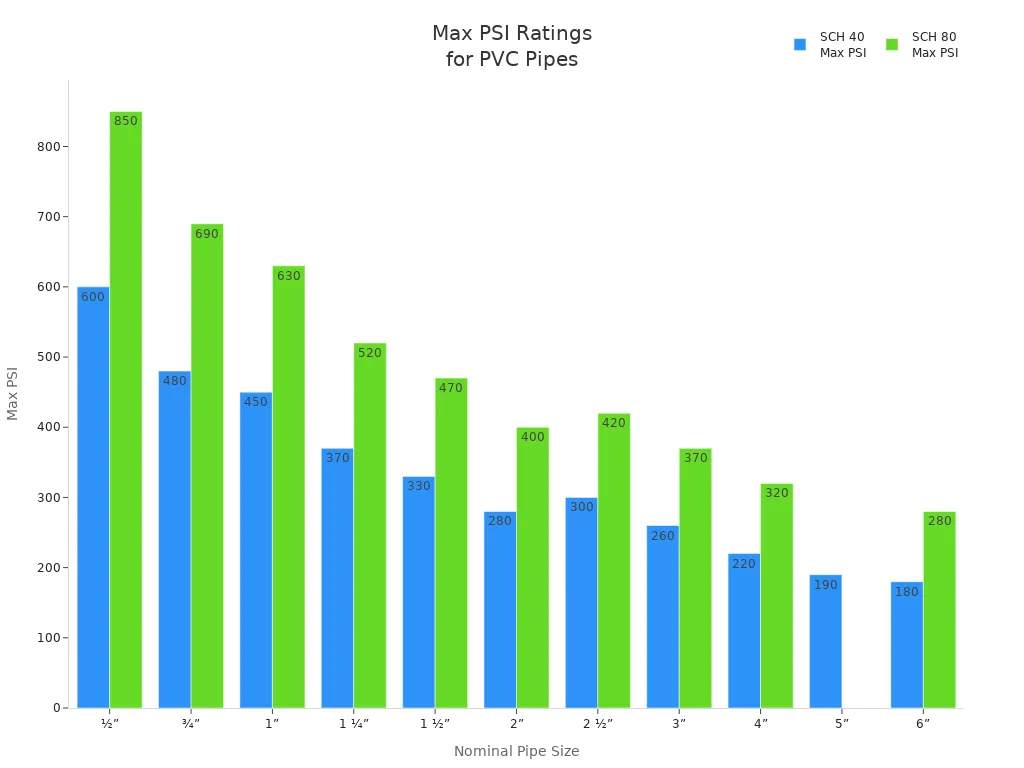
You see that schedule 80 consistently outperforms schedule 40 in pressure rating. For example, a 1-inch schedule 40 pvc pipe handles up to 450 psi, while schedule 80 manages 630 psi. This difference in strength means schedule 80 lasts longer under stress and maintains its performance even after years of use.
Durability also depends on environmental factors. Schedule 80 pvc pipes show excellent resistance to UV and weathering, maintaining higher impact strength after prolonged exposure. Schedule 40 offers good resistance but loses some impact retention over time. You choose schedule 80 when you need pipes to withstand harsh conditions and maintain performance.
Conduit Type | UV & Weathering Behavior | Notes on Performance |
|---|---|---|
Schedule 40 | Good resistance; moderate impact retention after extended UV exposure | Suitable for above-ground installations where moderate mechanical protection is needed. |
Schedule 80 | Excellent resistance; maintains higher impact strength after prolonged UV and weathering | Thicker walls enhance energy absorption and reduce surface degradation. |
You also need to consider temperature tolerance. Schedule 80 pvc pipes remain more stable under thermal and pressure cycling. Schedule 40 has lower tolerance under pressure, so you should avoid using it in hot water or high-pressure applications.
💡 Note: Schedule 80 provides better durability and strength for demanding applications, while schedule 40 is ideal for moderate pressure and less extreme environments.
Cost and Appearance
You must weigh cost and appearance when you select between schedule 40 and schedule 80. Schedule 40 pvc pipe costs less because it uses less material. Schedule 80 costs 10–40% more per foot, and the price increases with diameter due to extra wall thickness. If you need strength and durability, you pay more for schedule 80.
Pipe Type | Cost Difference |
|---|---|
Schedule 40 | Baseline |
Schedule 80 | |
Diameter Impact | Increases with diameter due to extra wall thickness |
You can quickly identify schedule 40 and schedule 80 by their color and markings. Schedule 40 usually appears light gray, while schedule 80 is dark gray. Both types have the same outside diameter, but you can distinguish them by checking the wall thickness and reading the printed specifications.
Pipe Type | Color | Identification Method |
|---|---|---|
Schedule 40 | Light Gray | Quick visual identification based on color |
Schedule 80 | Dark Gray | Markings include size, pressure rating, etc. |
Both pipes have the same outside diameter.
You can distinguish them by examining the wall cross-section.
Printed specifications on the pipe body help you identify the type.
You should also consider UV exposure. Both schedule 40 and schedule 80 pvc pipes experience discoloration, brittleness, and surface cracking after prolonged sunlight. Schedule 80 resists these effects better due to its thicker wall, so you get longer-lasting performance.
⚠️ Alert: If you plan to use pvc pipes outdoors, protect them from direct sunlight to extend their durability and maintain strength.
You now understand the key differences in wall thickness, strength, pressure rating, durability, temperature tolerance, color, and cost. This knowledge helps you select the right pipe for your applications and ensures reliable performance.
When to Use Each Type
Best Uses for Schedule 40
You often select schedule 40 for projects that demand versatility and cost-effectiveness. This pipe works best in environments where pressure remains low to moderate and where you do not expect extreme temperatures or chemical exposure. You benefit from its lightweight design and straightforward installation, making it ideal for home improvement and light commercial tasks.
You use schedule 40 pvc pipe for indoor plumbing, drain, waste, and vent systems.
You rely on schedule 40 for irrigation and sprinkler systems in landscaping.
You choose schedule 40 for swimming pool plumbing and water features.
You install schedule 40 in underground drainage where soil pressure is present but not excessive.
You avoid schedule 40 in situations where high temperatures or chemical exposure could compromise performance.
You protect schedule 40 from direct sunlight to prevent UV degradation and maintain durability.
💡 Tip: Always consider the interaction between pressure and temperature. As temperature rises, the strength and pressure rating of schedule 40 decrease. For example, at 120°F, the pipe’s performance drops, so you should avoid using it for hot water or near heat sources.
You should also evaluate the environment. If you expect chemicals or acids in the system, schedule 40 may not provide the durability you need. Chemical exposure can weaken the pipe and lead to failure. For outdoor applications, you must shield the pipe from UV rays to prevent embrittlement and loss of strength.
Best Uses for Schedule 80
You turn to schedule 80 when your project requires maximum strength and durability. This pipe excels in heavy-duty applications where high pressure, mechanical stress, or chemical exposure are common. You gain peace of mind knowing that schedule 80 maintains performance even in challenging environments.
You use schedule 80 for industrial water lines and chemical processing systems.
You rely on schedule 80 for high-pressure water distribution in commercial and municipal settings.
You choose schedule 80 for laboratory plumbing and manufacturing facilities where reliability is critical.
You install schedule 80 in HVAC systems that demand superior strength and resistance to impact.
You select schedule 80 for outdoor installations where pipes face frequent temperature changes and potential UV exposure.
You avoid schedule 80 in basic residential or low-pressure applications, as its extra strength and cost are unnecessary for these uses.
🛡️ Note: Schedule 80 pipe offers enhanced durability and strength, but you should reserve it for demanding or pressurized systems. In simple home plumbing, schedule 40 provides all the performance you need without the added expense.
You benefit from schedule 80’s thicker walls, which deliver better impact resistance and longer service life. This pipe stands up to harsh chemicals and fluctuating temperatures, ensuring your system operates safely and efficiently.
Quick Reference Guide: Choosing Between Schedule 40 and Schedule 80
Project Scenario | Recommended Pipe Type | Reason for Selection |
|---|---|---|
Home plumbing (cold water, low pressure) | Schedule 40 | Sufficient strength, cost-effective |
Landscape irrigation | Schedule 40 | Easy to install, handles moderate pressure |
Swimming pool plumbing | Schedule 40 | Good durability, resists moisture |
Underground drainage | Schedule 40 | Withstands soil pressure, affordable |
Industrial water lines | Schedule 80 | High strength, handles high pressure |
Chemical processing | Schedule 80 | Superior chemical resistance |
Commercial HVAC | Schedule 80 | Withstands impact, temperature fluctuations |
Outdoor exposed piping | Schedule 80 | Better UV resistance, long-term durability |
✅ Decision Table:
If your project involves low to moderate pressure and no harsh chemicals, use schedule 40. For high-pressure, heavy-duty applications, or environments with chemical or UV exposure, choose schedule 80.
You ensure the best performance and durability for your system by matching the pipe type to your specific needs. Always assess the pressure, temperature, and environmental factors before making your final selection.
Important Buying Tips
Compatibility and Installation
When you plan your pvc system, you must avoid mixing schedule 40 and schedule 80 pipes or fittings in the same line. This practice can cause compatibility issues that affect performance and safety. The table below highlights the main concerns:
Issue Type | Description |
|---|---|
Wall Thickness | Schedule 80 pipes have thicker walls than schedule 40, affecting the fit of connections. |
Socket Geometry | Differences in socket geometry can lead to improper fitting between pipes of different schedules. |
Manufacturer Guidance | Following manufacturer guidance is crucial to ensure compatibility when mixing schedules. |
You should always use schedule 40 pvc caps with schedule 40 pipe and schedule 80 pvc caps with schedule 80 pipe. This approach ensures a secure fit and maintains the pressure rating of your system. For best performance, follow these installation practices:
Ensure fittings are rated for no more than 60% of the pipe’s pressure rating to avoid weak points.
Perform pressure tests before burying or concealing pipes for easier repairs.
Maintain proper alignment and use quality solvent cement for joints to prevent leaks and cracks.
Provide adequate support along the pipe to prevent sagging and manage load stress.
“I have seen many Sch 80 installs with broken fittings,” so remember that thicker pipe does not guarantee a stronger system if you use weak fittings.
Safety and Environment
You must consider both safety and environmental factors when selecting pvc for your project. The table below compares key features of schedule 40 and schedule 80 pipes:
Feature | Schedule 40 | Schedule 80 |
|---|---|---|
Wall Thickness | Standard thickness | |
Crush Resistance | Standard | Superior |
Applications | General use | Heavy-duty applications |
Installation Depth | Shallow installations | Deeper installations |
Anticipated Loads | Lower load capacity | Higher load capacity |
Soil Conditions | Less demanding | More demanding |
Hydraulic Requirements | Standard flow | High-pressure flow |
For outdoor use, store pipes on a flat surface away from direct sunlight. Avoid dropping or dragging them to maintain durability and impact resistance. During installation, never place pvc near open flames and always use approved solvent cement. Schedule 80 pvc caps provide increased strength and better performance in high-pressure or heavy-duty environments, while schedule 40 pvc caps suit lighter applications.
Regularly inspect joints for leaks and replace aged pipes after decades of service. If your system handles potable water, check chemical compatibility charts and use UV-stabilized pvc outdoors. By following these tips, you ensure long-term performance and safety for your piping system.
You should choose schedule 40 pvc pipe for most low or medium pressure projects, such as residential plumbing or irrigation. For high-pressure or demanding environments, schedule 80 offers greater durability and safety. The table below highlights the main differences:
Feature | Schedule 40 | Schedule 80 |
|---|---|---|
Wall Thickness | Thinner | Thicker |
Pressure Rating | Lower | Higher |
Common Use | Home, light-duty | Industrial, heavy-duty |
Match your pvc selection to your project’s requirements.
Never mix schedule 40 and schedule 80 in the same system to avoid leaks or failures.
Consult a professional if you feel unsure about your choice.
FAQ
What is the main difference between Schedule 40 and Schedule 80 PVC pipe?
You see the main difference in wall thickness and pressure rating. Schedule 80 has thicker walls and handles higher pressure. Both types have the same outside diameter, so you can use the same fittings.
Can you use Schedule 40 and Schedule 80 PVC pipe together?
⚠️ Alert:
You should not mix Schedule 40 and Schedule 80 in the same system. This practice can cause leaks or failures due to differences in wall thickness and pressure ratings.
Is Schedule 80 PVC pipe safe for drinking water?
Yes, you can use Schedule 80 PVC pipe for potable water if it meets NSF certification. Always check the pipe labeling and local codes before installation.
How do you identify Schedule 40 vs Schedule 80 PVC pipe?
You can check the color and markings. Schedule 40 usually appears white or light gray. Schedule 80 is dark gray. The pipe’s printed specifications also show the schedule and pressure rating.