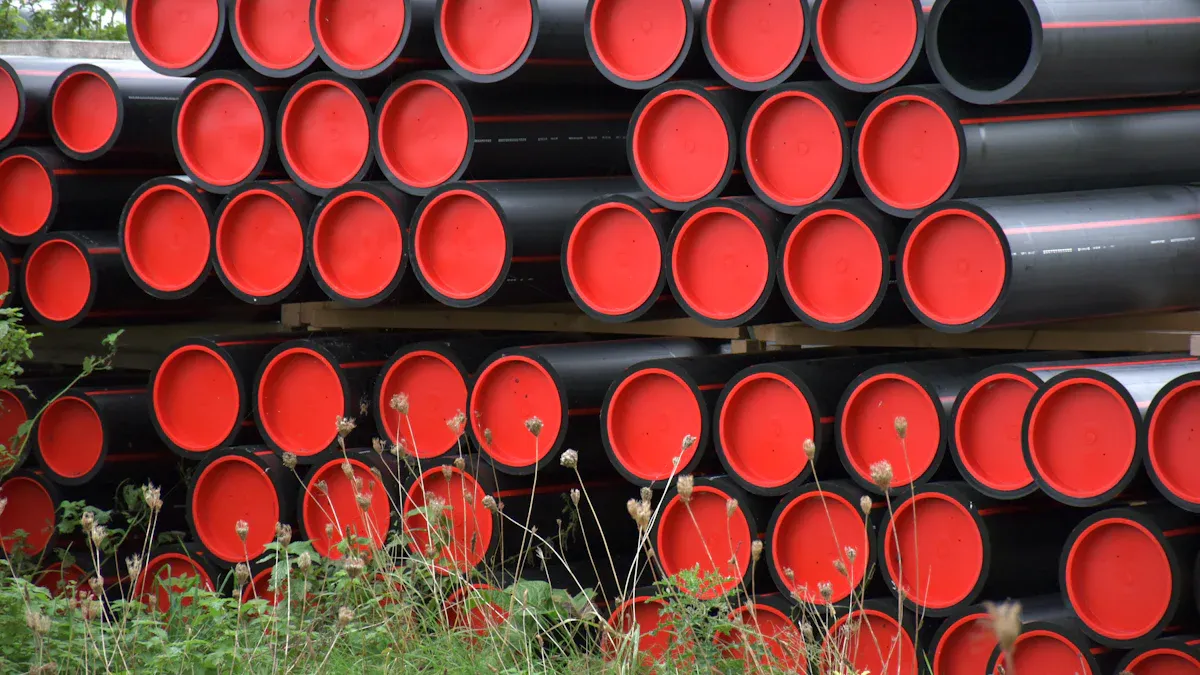
You need to pick the right construction drainage pipe for your project. This ensures the pipe functions effectively and maintains its strength. Choosing the appropriate type and size prevents clogs and reduces repair costs. Consider the volume of water that will flow through the pipe. Evaluate the soil conditions and the materials used for the pipe before making your decision. In 2026, you will find some common options:
PVC drain pipes are ideal for urban projects. They resist damage from chemicals and help save money.
HDPE drain pipes are flexible and durable, making them excellent for underground applications.
Cast iron pipes continue to be utilized in older systems, while concrete and clay pipes are reserved for specialized tasks.
Follow each step to make an informed choice. Always remember to request a quote for your project to ensure you find the best pipe for your needs.
الوجبات السريعة الرئيسية
Pick the right drainage pipe for your project needs. PVC works well in cities. HDPE bends easily for use underground. Check the soil before you pick pipes. Wet or clay dirt may need pipes that do not rust, like PVC or HDPE. Figure out how much water will flow. This helps you choose the right pipe size. Do not use pipes that are too small or too big. This can stop clogs and problems. Always follow local building rules when you put in pipes. This keeps you safe and stops trouble later. Ask a drainage expert if your project is hard. They can help you make a good drainage system and save money.
Assessing Your Construction Drainage Pipe Needs
Before you pick a construction drainage pipe, you should know what your project needs. Every site is different and has its own problems. If you check everything first, you can avoid spending extra money later. This also helps your pipe last longer.
Site and Soil Conditions
First, look at the ground and where you will build. The amount of water in the soil and the type of soil are important. Metal pipes can rust if the ground is wet a lot. So, you might not want to use them in damp places. Plastic pipes do not rust and work well in many soils. That is why many people use them for their projects.
نصيحة: Always test how fast water goes through the soil and how packed the soil is. These things change how water moves and stays in the ground.
Sandy soil lets water move fast but does not hold much water.
Clay soil keeps water for a long time, so you may need to change your drainage plan.
How hard the soil is and what minerals are in it also matter for your drainage system.
Water Volume and Flow
You need to guess how much water your pipes will carry. This helps you pick the right kind and size of pipe.
Think about how water slows down from bumps or hills.
Count how many sinks or toilets you have.
Use ways to measure speed or pressure to keep water moving well.
Make sure your pipe is not too small or too big. Small pipes can be noisy and break down the ground. Big pipes cost more and waste energy.
Project Scale and Location
How big your project is and where it is also matters.
Think about the weather and any rules you must follow.
Look at the land shape, how people use the land, and what drains are already there.
Decide if you need pipes for water on top, under the ground, or special systems like green roofs or ponds for rainwater.
Many places now want pipes that are good for the environment and can handle bad weather and tough rules.
If you check all these things, you can pick the best construction drainage pipe for your project.
Comparing the Right Types of Pipes
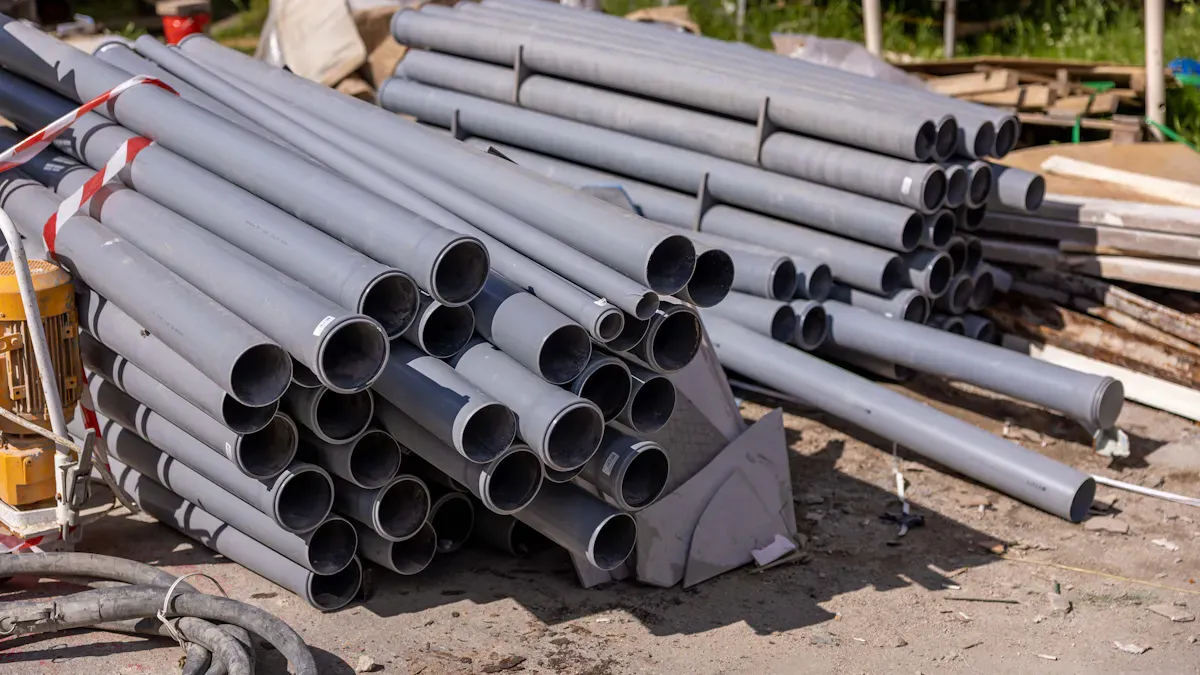
Picking the right types of pipes helps your drainage system work well. It also helps the system last longer. There are many types of pipes. Each one has special features. Let’s see the most common choices and how they are different.
PVC and HDPE Pipes
PVC and HDPE are two popular pipe types for drainage. You can see their main differences in the table below:
نوع الأنابيب | Suitable for High Temperatures | Annual Maintenance Cost (% of Initial Installation) | Installation Cost Advantage | |
|---|---|---|---|---|
بولي كلوريد الفينيل | 1 في 48,650 events | نعم | 2-3% | – |
البولي ايثيلين عالي الكثافة | 1 في 10,000,000 events | نعم | 15-30% أدنى |
PVC pipes are strong and stiff. You can use them for direct burial or trenchless jobs. They connect with solvent cement, rubber gaskets, or couplings. HDPE pipes are softer and more bendy. You can curve them around corners and fit them in tight spots. HDPE is good for trenchless work and installs faster with fewer parts. You spend less on fixing HDPE pipes because they last longer and resist chemicals better.
نصيحة: Pick HDPE if you want a pipe that bends and costs less to put in. Pick PVC if you need a pipe that stays straight and strong.
Corrugated and Solid Pipes
There are two main types of drainage pipes: corrugated and solid. Each type has its own good and bad points.
Characteristic | Corrugated Pipe | Solid Pipe (بولي كلوريد الفينيل) |
|---|---|---|
المرونة | عالي, bends easily | قليل, needs more fittings |
متانة | أدنى, can get damaged under pressure | عالي, strong and long-lasting |
Drainage Efficiency | أدنى, water moves slower | عالي, smooth inside helps water flow |
Clogging Risk | أعلى, collects debris easily | أدنى, easy to clean |
تثبيت | Simple, does not need exact angles | Harder, يحتاج إلى العمال المهرة |
يكلف | أدنى | أعلى |
Corrugated pipes are good for projects with lots of turns or small budgets. Solid pipes are best when you want a strong and long-lasting system.
Perforated vs. Non-Perforated Pipes
You also need to pick between perforated and non-perforated pipes. Perforated pipes have small holes that let water in fast. This helps drain water from the soil quickly, especially when it rains a lot. If you put the holes down, water gets in right away. Pipes with many small holes collect water better than pipes with a few big holes. Non-perforated pipes move water from one spot to another without letting water in or out along the way.
ملحوظة: Use perforated pipes to drain wet soil or near foundations. Use non-perforated pipes to move water away from buildings or paved places.
If you know about the right types of pipes, you can pick the best one for your project’s strength, cost, and how well it works.
Key Selection Criteria for Construction Drainage Pipe
When you pick a construction drainage pipe, you need to think about a few important things. These things help your plumbing last longer and work better. You should always match these things to what your project needs.
Strength and Durability
You want your drainage system to stay strong for many years. The strength of a pipe depends on what it is made from and how it handles pressure from dirt and water. Some pipes, like cast iron and ductile iron, can last 50 ل 100 سنين. Ductile iron is even better because it bends without breaking and does not get damaged when the ground moves. New pipes are made to fight off chemicals and heavy weight. How strong the joints are is also important. Good joints stop leaks and keep your system safe.
معيار | Overview | Importance | Significance in Drainage Construction |
|---|---|---|---|
BS 4514 | Talks about PVC soil and vent pipes, and what size and tests they need. | Makes sure the material is good, the size is right, and the pipe lasts. | Helps pipes fit together, follow rules, and work well in drainage. |
BS 5255 | Lists what fittings you need for PVC-U soil, يضيع, and vent pipes. | Makes sure parts fit, are strong, and work well. | Keeps the system safe, working well, and up to code. |
BS 4660 | Says what extra plastic fittings you need for pipes underground. | Makes sure the fittings are strong, last long, and are the right size. | Helps the system last, work well, and follow the rules. |
مقاومة التآكل
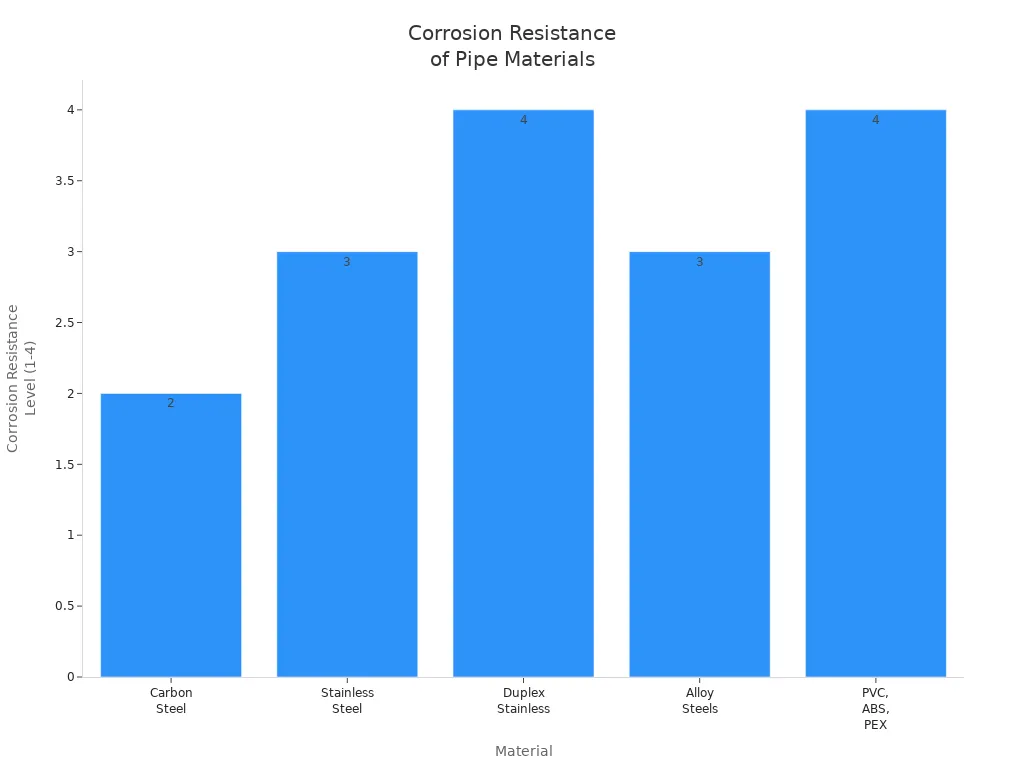
Corrosion can hurt pipes and make them leak. You should choose pipes that do not rust or get damaged by chemicals. بولي كلوريد الفينيل, ABS, and PEX are very good at fighting corrosion. Stainless steel and duplex stainless steel also work well in tough places. You can use special coatings or linings to protect metal pipes. This helps your system last longer and saves money on repairs.
مادة | مقاومة التآكل Level | Notes |
|---|---|---|
الكربون الصلب | Moderate | Good price for most jobs. |
Stainless Steel (304/316) | عالي | Good for places with lots of corrosion. |
Duplex Stainless Steel | Very High | Great for really tough places. |
Alloy Steels | عالي | Best for special jobs. |
بولي كلوريد الفينيل, ABS, بيكس | Very High | Used more and more for many jobs. |
نصيحة: Pipes that do not rust or corrode need fewer repairs and last longer. This means you save money over time.
Pipe Size and Flow Capacity
You must pick the right size for your pipes. If you choose the wrong size, your system might clog or flood. Use a drainage calculator or follow these steps:
Pipe Full Flow Capacity (Qmax in cfs) = K Factor x [Slope (ft/ft)]^1/2.
Use Manning’s n value of 0.012 for reinforced concrete and HDPE pipes.
If your pipes are too small, water will back up. If your pipes are too big, dirt can pile up and block the water. Always check how fast the water moves and how much water you expect.
Installation and Local Codes
Putting in pipes the right way is very important. You need to plan the slope and make sure the joints are tight. The type of ground can make putting in pipes harder. Sandy or wet ground may need special tools or products. Always check the local building codes before you start. Every city or state can have different rules for what pipes you can use, what size, and what permits you need. You must follow these rules to pass checks and avoid problems later.
ملحوظة: For every plumbing job, turn in your plans and get approval before you put in your drainage system.
If you think about all these things, you will pick the best construction drainage pipe for your project.
Step-by-Step Pipe Selection Guide
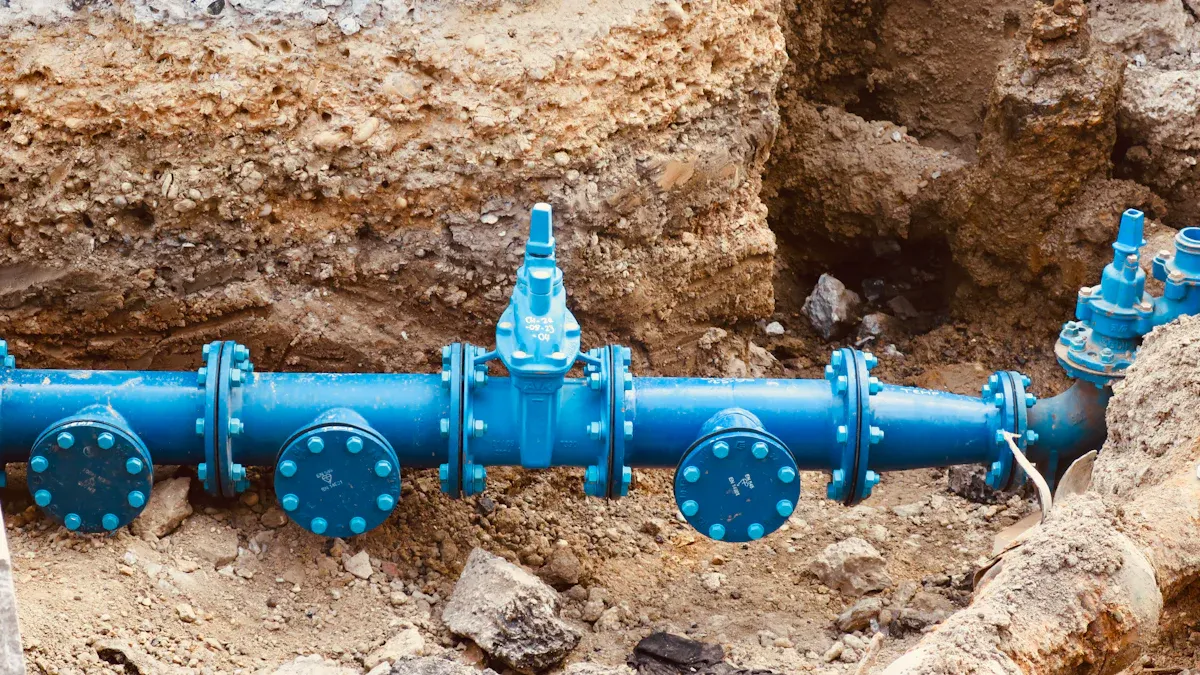
Picking the right construction drainage pipe for your plumbing job can seem hard. You can make it easier by following simple steps. This guide helps you avoid mistakes and find pipes that save money and last a long time.
Decision Checklist
A checklist helps you make good choices. It keeps your project moving and helps you find problems early.
Write down your math. يستخدم rainfall numbers and pipe size to plan.
Set up a way to check your work. Ask a drainage engineer to look at your plans and local rules.
Pick the best pipe material for your site. PVC lasts a long time. HDPE bends and fits around things.
Check pipe materials and sizes. Make sure they follow building codes and fit the number of sinks or toilets.
Figure out the right slope. This stops water from sitting still or backing up.
Make sure your plan has all needed permits and approvals.
نصيحة: A checklist helps you find mistakes before they cost you money. You can save time and money if you follow each step.
Matching Pipe to Project
You need to pick a pipe that fits your project. Every site is different. Use these ideas to help you choose:
Guess how much water you need to move. Pick a pipe that can handle it.
Choose the smallest pipe size your project needs. For storm drains, use at least 12 inches wide for up to 50 feet. يستخدم 15 inches if you need more.
Pick materials that work for your site. Think about soil, weather, and how pipes change with heat.
Keep water moving fast enough. Use the Manning equation to check your plan.
وصف | |
|---|---|
Hydraulic Capacity | The pipe must carry enough water. Some designs, like sliplining, make the opening smaller. |
Structural Capacity | The pipe must be strong and handle tough spots. What it is made of matters. |
Constructability | You need to check how you will put in the pipe. Make sure you can build it as planned. |
Grouting/Flotation | Putting grout in the right spot keeps the new pipe steady and helps it hold weight. |
ملحوظة: Tubular pipe is good if you need a pipe that bends and is easy to put in. It works well in tight places or where pipes need to curve.
When to Consult an Expert
Sometimes you need help from a drainage expert. You should ask for help if your project is tricky or has strict rules.
Experts help you plan good drainage and water control.
They pick the right type and number of drains and where to put them.
Good drainage design helps waterproofing and stops leaks.
Look for experts with these skills:
Many years working with drainage
Focus on drainage, not just sometimes
Strong skills and knowledge
Careful measuring for distance and height
Clear written plans with their bid
References from past jobs
Good at talking and answering questions
نصيحة: If you are not sure about your plan or have a strange site, you should talk to an expert. This helps keep your project safe and working well for a long time.
You can pick the best construction drainage pipe by using easy steps. Start by looking at your site and how much water you need to move. Then, look at different pipe types and what they are made of. Use a checklist to help you make choices. If you are not sure, talk to a drainage expert.
Think about what your project needs.
Look at different pipe choices.
Follow the rules for picking pipes.
Ask for help if you need it.
For more help, read your local building codes or go to good construction websites. You can find guides and tools that make things easier.
التعليمات
What is the best pipe material for wet soil?
You should use HDPE or PVC pipes in wet soil. These materials do not rust. They last longer and work well in damp places.
How do I know what pipe size I need?
Measure how much water you expect to move. Use a drainage calculator or ask an expert. Bigger pipes carry more water but cost more.
Can I install drainage pipes myself?
You can install small drainage pipes if you follow local codes. For large or complex jobs, you should hire a professional.
How often should I check my drainage pipes?
Check your pipes once a year. Look for clogs, leaks, or damage. Regular checks help you avoid big problems later.